Climate-friendly alternatives: the future for gas

Biomethane and hydrogen are up-and-coming alternatives to heating with natural gas. Climate-friendly solutions are being developed as a matter of urgency in the production of sustainable gaseous energy sources and in gas condensing technology.
- Blog
- End customer - Investor
Climate-friendly alternatives: the future for gas
The road to climate neutrality requires alternatives both to oil and to conventional gas heating systems. Unlike energy sources that are on the way out, such as coal and fuel oil, gas heating has a decided advantage in the evolution of energy production: it can be adapted to the changing climate policy and be made greener. The environmental credentials of gaseous fuels vary depending on the production processes involved and the efficiency of the heating technology used. Not all gas is alike, and not all boilers are alike.
Green alternatives to natural gas
The characteristics of biomethane make it almost a twin to natural gas. However, it is produced sustainably from biogenic waste: food waste, damaged timber, sewage sludge or manure from the agricultural industry are processed into raw biogas via fermentation. This can then be fed into the existing gas networks in the form of biomethane. Electricity is only needed to control the plants. Another benefit is that the value created remains with the specialised farmers or recycling facilities in the region.
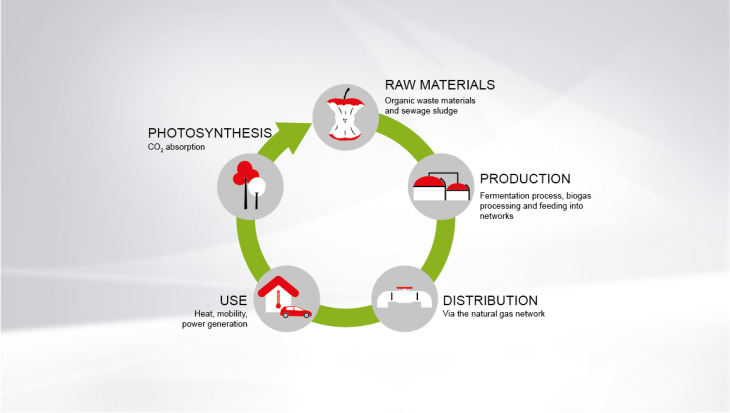
All gas condensing boilers from Hoval can already be operated with up to 100% biomethane. If biomethane makes up at least half the mixture of gases, the CO2 emissions are reduced by 30% – without any additional capital investments. In general, a combination of electrification and regenerative gaseous energy sources is the most sustainable approach to the heating of the future. This is because a dramatic increase in the use of electricity would result in a huge expansion to power plants and electricity networks, while for green gas, the existing infrastructure can be used or adapted at relatively low expense.

Zukunftshoffnung Wasserstoff
Eine Schlüsselrolle kommt bei der Energiewende dem Wasserstoff zu. Das chemische Element H2 ist auf unserem „blauen Planeten“ nahezu unbegrenzt vorhanden und beim Verbrennen entsteht praktisch nur Wasserdampf. Über die Ökobilanz dieses Energieträgers entscheidet das Herstellungsverfahren. CO2-neutral lässt sich das Gas nur per Elektrolyse mit Strom aus nachhaltigen Quellen erzeugen, während sogenannter grauer Wasserstoff den Treibhauseffekt sogar verstärkt.
Man unterscheidet daher folgende Arten von H2:
- Grüner Wasserstoff: hergestellt aus Wasser + Überschuss-Ökostrom
- Blauer Wasserstoff: hergestellt aus Methan + Überschuss-Ökostrom
- Grauer Wasserstoff: hergestellt aus Methan + Strom aus fossilen Energieträgern
Heizsysteme für H2 vorbereiten
Die verschiedenen Möglichkeiten, die Wasserstoff bietet, werden intensiv beforscht und mit Milliarden gefördert, doch eine komplette Umstellung scheint erst längerfristig realistisch. Inzwischen soll der Wasserstoffanteil in den Gasnetzen schrittweise erhöht werden. In Form von grünem Wasserstoff kann erneuerbare Energie – gewonnen aus überschüssigem Strom aus Photovoltaik und Wasserkraft vom Sommer – etwa für den Heizbedarf im Winter gespeichert werden. Hoval unterstützt diese Entwicklungen aktiv und macht seine Gas-Brennwertkonzepte fit für den Wasserstoffbetrieb. Spätestens 2025 sollen in der EU alle Neugeräte wasserstofffähig sein. Der neue UltraGas Brennwertkessel ist bereits auf dem besten Weg, H2-ready zu werden.
Königsweg in Richtung Klimaziele

Nur ein smarter Mix aus zeitgemässen Energieformen kann die Versorgung der Haushalte und Betriebe sichern und dabei das Klima schonen. Bestehende Gasnetze, die Verwertung von Stromüberschüssen oder Bioabfällen, hocheffiziente Heiztechnik und die laufende Forschung an klimafreundlichen Lösungen sind starke Argumente für die Gasheizung der Zukunft. <o:p></o:p>